Archive for October, 2010

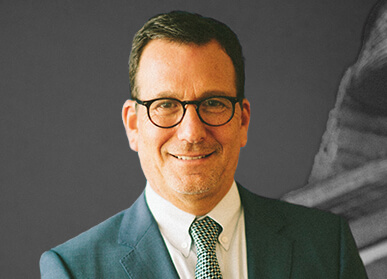
Foreclosure Headline News in Review by Roy Oppenheim

Sunday, October 31st, 2010

The Good News: Big Banks Told Not to ‘Fix’ a Fraud

One of Roy Oppenheim’s favorite articles this weekend is from the Wall Street Journal by Robbie Whelan; it’s about Ohio’s attorney general pressing banks to modify mortgage loans versus ‘fixing’ false and sloppy paperwork. Attorney General Richard Cordray could not have said it better:

“The banks are committing fraud on the court, essentially perjury, and then saying ‘Whoops! You caught me! Here’s some different evidence and use that instead,’ ” Mr. Cordray said in an interview Friday. “I know a lot of judges are not going to take kindly to that.”

The Interesting News: Bank of America Letter to NYT Editor

BofA steps up to the plate with the NYT, but what does this really mean?

We don’t claim perfection and will address mistakes quickly when they arise, but Bank of America is doing all we can to keep people in their homes, or ensure a fair, consistent process if that is not possible said Barbara J. Desoer President of Bank of America Loan in a Letter to the Editor in The New York Times.

Florida News: South Florida Foreclosure Rate One of Highest

In the third quarter of 2010, South Florida led the nation with the highest number of foreclosure filings among large metropolitan areas, with more than 59,064 homes in distress. That’s a 24 percent increase from the previous quarter, and a 9 percent jump from the same period in 2009. Led by a large increase in bank repossessions, the region’s foreclosure rate ranked 7th nationwide, with one out of every 41 homes in some stage of foreclosure.
(more…)

Florida Foreclosure Bank Fraud Workshop by Roy Oppenheim

Wednesday, October 27th, 2010

Florida Foreclosure Bank Fraud Workshop by Roy OppenheimFind out what the foreclosure crisis headlines mean to Florida homeowners and how this ‘train wreck’ impacts real estate buying, selling and investing. Join Florida Real Estate Attorney and Legal Blogger Roy Oppenheim on Wednesday November 3, 2010 via a streaming webcast on Oppenheim Law TV or limited seating for the live workshop in Boca Raton, Fl.

It’s out of control! Real estate law is moving at the speed of light and news from the banks changes by the hour. Gretchen Morgensen of The New York Times remarks that this is One Mess that Can’t be Papered Over. Allan Sloan, Fortune Magazine’s senior editor at large, sums up the crisis this way in his column for the Washington Post: “If you screw up big time when you deal with a giant bank, you’re toast. If the giant bank screws up when it deals with you, it gets a do-over.”

Florida, hit hard by the housing crisis, is emerging as a central hub of the mortgage-related problems. What does this mean to the Florida homeowner? Oppenheim shares the latest news, as well as his views on this ever-changing set of events at a free real estate workshop, which streams live via the web or in person on Wednesday, November 3rd from 6 – 7 p.m.

  • What: Florida Homeowner Foreclosure Fraud Workshop
  • When: Wednesday, November 3, 2010 – 6 to 7 p.m.
  • Who: Homeowners facing foreclosure or underwater mortgages, real estate professionals, buyers, sellers and investors
  • Where: Oppenheim Law TV

Or come in person

  • 95 NW 11th St., Boca Raton, FL 33432
  • (more…)

Big Problem for Banks: Due Process. Oppenheim Agrees

Saturday, October 23rd, 2010

Bravo to Joe Nocera who writes the Talking Business column for The New York Times each Saturday. Today’s story Big Problem with Banks: Due Process is right on target according to Roy Oppenheim, foreclosure defense attorney with Oppenheim Law

Here is an excerpt:

It is absolutely true that the homeowners that Bank of America wants to foreclose on are in default on loans they should never have gotten in the first place. (Gee, whose fault was that?) But it simply does not follow that the bank therefore has an absolute right to take back the home. Under the law, it has to prove it has that right — by filing documents that show that the owner of the mortgage has conveyed that right to it. That’s why this affidavit scandal isn’t some legal nicety. It’s about the single most important value of American jurisprudence: due process.

“Just because the homeowner hasn’t paid his mortgage doesn’t mean anybody in the world can kick him out,” said Katherine Porter, a visiting law professor at Harvard. “The bank has to have the standing to do that.” She added that the bank’s argument was a little like saying that someone who committed a crime shouldn’t receive a trial because he’s so obviously guilty. America just isn’t supposed to work that way.

Real estate law is moving at the speed of light and the playing field is changing when it comes to banks and foreclosure fraud. Oppenheim shares his views on the Oppenheim Law video channel discussing how, up until now, most members of the judiciary were not taking homeowners seriously and the playing field is changing. He shares a quick overview on what has been happening in the last few weeks concerning the Florida foreclosure fraud crisis.
(more…)

Party Over for Banks! Homeowners Get Their Day in Court, Says Roy Oppenheim

Friday, October 22nd, 2010

Hiring “Burger King kids” who barely knew what a mortgage was! This best describes the profile of a robo-signer according to a recent New York Times foreclosure article. But the tides are changing; instead of plowing through 70 foreclosure cases a day, judges are down to a mere 25 cases each day. Now maybe that the foreclosure monkey business is slowing down, supervisors will perhaps have the energy to sign their own names on the documents they send to the judges.

One example is Cheryl Samons, the supervisor at the law offices of David J. Stern in Plantation who “would give certain paralegals rights to sign her name, because most of the time she was very tired, exhausted from signing her name numerous times per day,” said a Stern employee in a deposition that the Florida attorney general released Monday.

Foreclosure La La Land

The shoddy foreclosure procedures, and the subsequent suspensions, have frozen cases in court. The moratorium “means these cases will be sitting there in la la land,” a judge told the Wall Street Journal.

But foreclosure la la land only means homeowners get the attention they deserve when they are represented by competent counsel. Otherwise, “the cases still seem to be moving forward,” according to Oppenheim’s observations as related to Bloomberg News when he attended court earlier this week.

“Appellate courts in Florida are now requiring judges to listen to all defenses and give homeowners their day in court. This is a drastic change from what has been occurring until now: appellate courts in Florida routinely, without an opinion, kept affirming the lower court’s unconstitutional behavior,” said legal blogger and Florida foreclosure defense attorney Roy Oppenheim.
(more…)

Roy Oppenheim to the Wall Street Journal: “Your editorial will make future investors think twice about entire system”

Tuesday, October 19th, 2010

Oppenheim Law’s South Florida Law Blog shares a letter Roy Oppenheim wrote in response to an editorial piece published on October 9th called The Politics of Foreclosure:

Your editorial “The Politics of Foreclosure” (October 9) misses a number of significant legal as well as macro economic issues. In fact the editorial’s latent sarcasm (i.e., “the affidavit was supposed to be signed by the nameless, faceless employee in the back office who reviewed the file, not the other nameless, faceless employee who sits in the front”), suggests a clear lack of respect for (i) the protections afforded to all of us by the United States Constitution, (ii) State Rights and (iii) how the real property recordation systems throughout the US have played a critical role in capital formation for 150 years.

As a real estate attorney in Florida who previously practiced on Wall Street, I personally know of countless cases where the bank sues the wrong homeowner for foreclosure or where two banks claim to own the same mortgage. It seems that you are significantly discounting the importance of procedural due process that requires that an affidavit be sworn under oath and that an individual has personal knowledge of the amounts owed by a borrower. Further, you are making undue light of notary fraud and perjury (both criminal acts) when an individual attests to another’s signature with knowledge that such attestation is false. Such conduct is not only a violation of state law but also of various federal laws such as The Fair Debt Collection Practices Act, violations under the Federal Trade Commission for Unfair and Deceptive Trade Practices, mail fraud, wire fraud, and possibly racketeering. These “mistakes” are not mere technical issues but go to the core of our legal system.
(more…)

Chicken Little, Chicken Little! The Foreclosures are all Fraudulent…The sky isn’t falling, but bank stocks are sliding

Saturday, October 16th, 2010

The sky isn’t falling, but bank stocks are sliding
Foreclosure Fraud
When an acorn hits her on the head, Chicken Little believes the sky is falling down and runs to tell the King and everyone she meets along the way.

Don’t believe everything you are told is the moral of the Chicken Little fable.

Bank stock prices start to react to the realization. Unlike Chicken Little, Oppenheim Law was right!

So why is Congress allowing the banks to do their own internal investigation?

“Isn’t that allowing the fox to watch the hen house?” asks Roy Oppenheim, legal blogger and Florida real estate attorney specializing in foreclosure defense. “In my last workshop about toxic foreclosures, we discussed the ramifications this would have on the bigger picture for the banks, casting doubt and speculation from the investment community.”

Today’s Wall Street Journal headlines might feel like the sky is falling in the real estate world. Mortgage Damage Spreads is the headline talking about how the unfolding foreclosure-processing debacle is causing bank stocks to slide and putting millions of delinquent borrowers in limbo.

Banks stocks were hammered on Friday for the second straight day as investors continued gauging the sector’s exposure to higher operating and legal costs.

Bank of America Corp. shares lost nearly 5%. Shares of Wells Fargo & Co. also fell nearly 5%, while J.P. Morgan Chase & Co. fell 4% and Citigroup Inc. lost nearly 3%. And the cost of protecting against the default of bank bonds continued to surge.

Whether its CNBC commentators, CBS reports or Citibank analysts, the writing on the wall is getting clearer by the day: the foreclosure fraud crisis will have a disruptive impact on various aspects of the economy.

Florida Foreclosure Crisis

U.S. forecsloure inventory by state, 2010 second quarter. U.S. average is 4.57%, Florida foreclosure rate is 14.04%

The Daily Show and Mortgage Banker’s Association; Roy Oppenheim Offers Technical Insight

Thursday, October 14th, 2010

The foreclosure “walk of shame” happens to the best of us; even the Mortgage Banker’s Association (MBA). When Roy Oppenheim received a call from the producers of The Daily Show with Jon Stewart; he knew this was not the typical call from a distressed homeowner facing foreclosure. This was about a topic Oppenheim had shared on his blog months ago. The Daily Show news team was sniffing out a story of satire and realism, piecing together the irony of The Mortgage Banker’s Association’s Strategic Default.

Homeowners are walking away from mortgages even when they can afford to pay, and so is the MBA. Yes, the MBA walked away from its headquarters, a $79 million building they purchased three years ago in Washington D.C.

Oppenheim discussed in several South Florida Law Blog posts why he thinks MBA President and CEO John Courson is clueless when it comes to morals and ethics. He was happy to shed insight to the Daily Show producers on the irony of MBA’s own strategic default considering Courson’s countless media quotes questioning the homeowner’s moral obligation to pay the mortgage.

An excerpt from The New York Times:

John Courson, president and C.E.O. of the Mortgage Bankers Association, recently told The Wall Street Journal that homeowners who default on their mortgages should think about the “message” they will send to “their family and their kids and their friends.”

For more foreclosure news, stay connected with Oppenheim Law on Twitter @oplaw, Facebook and YouTube.


PHP/MySQL Components, WordPress Plugins, and Technology Opinions at TravisWeston.com

Bad Behavior has blocked 2709 access attempts in the last 7 days.