Archive for the ‘Florida real estate’ Category

Happy New Year for Homeowners! No More Cutting Corners for Banks!

Thursday, January 5th, 2012
Banks will need to clean up their circus “act” in 2012 when it comes to Florida foreclosure cases thanks to a series of stinging decisions handed down by the 4th District Court of Appeals that could be the gift that keeps on giving for Florida homeowners.
The court finally realized the banks must have the proper authority before they proceed in the foreclosure process. For years I have been saying the banks have systematically been cutting corners in the foreclosure defense process by not having the requisite power to bring their cases.
In this most recent case, Robert McLean vs. JPMorgan Chase, Chase, which was seeking to foreclosure on McLean’s Broward County home, claimed the note from the borrower was “lost, stolen or destroyed.” I call shenanigans on that claim. The truth is banks were in such a rush to move forward that they just never bothered to check their own paperwork.
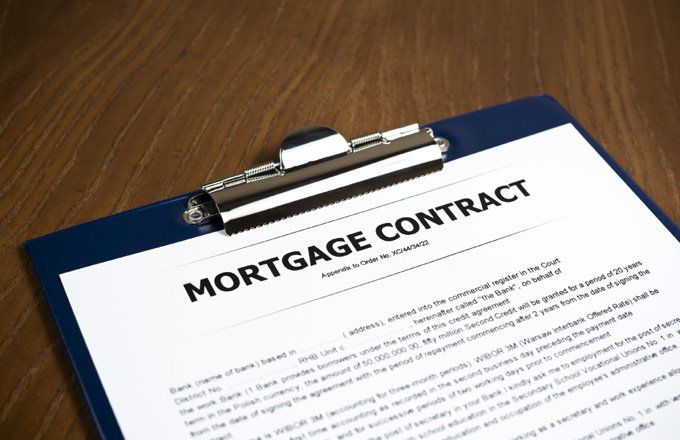
McLean sought to squash the foreclosure because he said that Chase ultimately could not prove they were the owner of the note. In fact the assignment of mortgage, which is a document which indicates that a mortgage has been transferred from the original lender, which Chase produced to the court was signed three days AFTER the first foreclosure complaint was filed by the bank.
The 4th DCA, in our eyes, had no choice but to reverse a lower court’s decision and side with the homeowner.  As the saying goes, possession is nine tenths of the law, and in this case, Chase was left holding an empty bag. The court noted that if there was “substantial doubt about the note” that the bank should dismiss and refile the case, and it was clear from Chase’s lack of concrete proof that they had no legal standing in this case.

The 4th DCA’s ruling also guarantees homeowners have a right to an evidentiary hearing, rather than just a summary judgement.

The decision is a monumental leap forward in the way courts handle foreclosure cases and the role that the mortgage assignments play in the foreclosure process.  What the courts have been doing was effectively denying the due process rights of those who were in foreclosure by not forcing the banks to prove ownership of these mortgages.

Gerald Richman, a lawyer for the foreclosure firm Shapiro and Fishman tried to downplay the importance of this ruling in the Palm Beach Post, saying it didn’t mean the foreclosure had no merit. Oh Gerry, you’re missing the point, by a mile. If you’re going to make people cross every “i” and dot every “t”  before they get the keys to the kingdom, how can we not demand banks do the same before they take them back!!

The truth is the process the banks engaged in was unfair and unconstitutional, and the courts have now come to the conclusion that we did long ago.

Thank you, 4th District Court of Appeals, and may the New Year bring you many more moments of clarity like this one.

Foreclosure Mills, Bank Fraud and the Housing Market — 2011′s Top Headlines Pt. 2

Saturday, December 31st, 2011
Continuing our list here’s Pt. 2 of our Top 10 stories for 2011 —

As 2011 got underway we were presented with a fascinating yet disturbing report by the Florida Association of Court Clerks called “Unfair, Deceptive and Unconscionable Acts in Foreclosure Cases”.  It brought these horrible practices into the harsh light of day.

“What we got from this is the state has had the opportunity to see where the laws have been broken,’ Palm Beach County Clerk and Comptroller Sharon Bock said at the time, “and frankly, it is in large part thanks to the work of the defense attorneys.

We cited April Charney from the Jacksonville Area Legal Aid and Peter Ticktin and many others wonderful attorneys who have taken bank officers’ depositions, challenged judges rulings and fought the good fight for the Florida homeowner.

#4 — Cracked! Humpty Dumpty, Chase and GMC, the Bank Fraud Foreclosure Crisis Continues to Fall!

Somewhere along the line, the overly ambitious bankers on Wall Street had the “great idea” of slicing and dicing the interest of the Promissory Note and literally severing it from your Mortgage. Why? Convenience,expediency, and, arguably, greed.  And much like Humpty Dumpty after his great fall, the banks couldn’t bring the mortgages and their corresponding Notes all back together again. The banks were accused of fraud and perjury trying to do just that.

# 3 —  Housing Market Poll: When Will Florida Recover?

If Americans are right, 2012 will finally be the magic year for the housing market. Over 2,000 adults were polled by Trulia and RealtyTrac , and the majority, 22 percent, said most Americans think the housing market will fully recover in the new year. A mere 10 percent thought a recovery would happen this year, while nearly a quarter of those surveyed predicted a bumpy road until 2015 and beyond.

However the South Florida Law Blog is more pessimistic, believing it will be at least 2016 before Florida’s housing market fully recovers, but a new study shows many Americans are far more optimistic. Although foreclosures have slowed in Florida, we believe they may kick back into high gear.

#2 – Deficiency Judgments Haunting Return, Jason Lives Once Again

 This was yet another blog where we spoke about our deficiency judgments.  While most large banks were too preoccupied with foreclosures to pursue deficiency judgments, the Sun-Sentinelreported on the fear that when banks catch up in the next several years, they will aggressively go after these judgements.If this happens, expect the main targets to be strategic defaulters, people who can afford their mortgages but defaulted because they are so underwater that it didn’t make any sense to pay. Not every strategic defaulter has to worry though. A deficiency judgment can only be entered in foreclosure cases, not short sales, unless the bank decides to file an action and litigate in court.

Miami-Dade County Judge Maxine Cohen Lando went on the record to dress down a foreclosure mill in such a fashion that it brought chills to any lawyer.  The court questioned what kind of supervision is going on at the foreclosure mills and whether the named partners were in any manner setting up the proper systems to ensure that quality work was being produced.

“You are walking in here totally unprepared, except to make a bunch of flimsy excuses,” she told the banks lawyers. We finally saw a judge take the entire foreclosure production process to task;  a judge who is no longer afraid to tell the truth and do her job.

Honorable Mention — Early Holiday Presents from the 4th DCA

This story was too recent to rank high on our list, but it was too important not to mention. Homeowners got a nice early present from the 4th District Court of Appeals this season, who thanks to some stinging decisions, realized that the banks must have the proper authority before they proceed in the foreclosure process. For years we’ve been saying that the banks have systematically been cutting corners in the foreclosure defense process by not having the requisite power to bring their cases. They’ve been denying the due process of  those in the foreclosure process by allowing banks the banks to proceed.  That process was unfair and unconstitutional, and  the courts have now come to the conclusion that we did long ago. 

So there you go. We here at Oppenheim Law have been proud to serve you, the homeowner, and look forward to continuing to fight the good fight in the upcoming year. Happy New Year and we’ll see you in 2012!

Foreclosure, Short Sales, Deficiency Judgments — 2011’s Top 10 Headlines: Pt.1

Friday, December 30th, 2011

In our last blog we talked about the stories that resonated with Roy Oppenheim in 2011, but what stories mattered to you?

We reviewed the most popular stories on the South Florida Law Blog this year and came up with our list of the top 10 posts for 2011

# 10 — Florida Deficiency Judgments FAQs . . . By Popular Demand

Some of Oppenheim Law’s most popular videos and blog posts this year were on the topic of deficiency judgements. Understanding deficiencies and the Florida rules which pertain to them are key to avoid getting a deficiency judgment.

The unpaid mortgage debt associated with a residence is a deficiency.  A bank can foreclose and force a judicial sale of a home if the mortgage borrower fails to pay the associated mortgage debt.  The deficiency is the difference between the proceeds from the sale and the remaining mortgage loan balance. A deficiency can also result from a short sale, which is an alternative to foreclosure.

The rules pertaining to deficiencies differ from state to state. In Florida, if the bank is successful in obtaining a deficiency judgment, it will be recorded in the public records and collectable for up to twenty years. To avoid the possibility of getting a deficiency judgment, before deciding to walk away from your home, hiring a good foreclosure defense attorney is necessary.

#9 — #Fail – Government Plan to Help #Florida Homeowners

At first glance, it looked  like Florida foreclosure victims were finally getting the help they need from the feds. Reading the fine print it looks like if we had to describe this in one tweet word: #fail.

The two agencies that are in charge of overseeing the Independent Foreclosure Review went  have gone out of their way to keep the details of this program secret.  The most alarming issue is the possible conflict of interest between the consulting firms that were chosen by bank regulators to administer the foreclosure reviews. The fact is these consulting firms are actually getting paid by the banks.

The same banks that ultimately led the economy into the mortgage crisis were placed in control of deciding which homeowners are entitled to compensation for the banks own wrongdoings.  It is doubtful homeowners will receive any meaningful relief from this program.

#8 — Law Review Executive Summary: Black Magic of Securitized Trusts

Deconstructing the Black Magic of Securitized Trusts by Roy D. Oppenheim and Jacquelyn K. Trask-Rahn gives an in-depth analysis of the process of securitizing mortgages and how it has gone awry. The article begins with a focus on the rise of subprime lending, the impact that subprime loans, such as “interest-only” and “negative amortization,” had on the American Dream of home ownership, and how “securitizing” these loans led to a false sense of security for homeowners and investors during the housing bubble.

During the spike in foreclosure filings that followed the implosion of the market, in an effort to prove proper standing to bring the action, banks began producing tens of thousands of assignments predating the filing of the foreclosure action. This mass production of assignments proved that trustees had not properly transferred the mortgages from inception thus the banks laced standing to foreclose.

#7 — Banks Desperately Seeking Short Sales

Borrowers who are in or nearing foreclosure are being offered thousands of dollars to short sale their homes. Some are even being offered $35,000 to get rid of their homes, and quickly. This situation presents an intriguing insight into the way banks are thinking at the moment. Banks would rather pay you and take a loss rather than forecloseon homes.Bank of America’s chief economist, Mickey Levy, while speaking privately, spoke of the concern that the 1.8 million bad loans in the nation will drive down the market if they go into foreclosure. Such fears help explain why the banks are desperate to avoid foreclosing on homes. In the end, this situation is a win-win. Not only do banks protect home prices, but they stand to get back more money quicker from a short sale than a foreclosureand homeowners get out of their houses with some cash in their pockets.
Number 6 on our list also dealt with short sales, as Oppenheim Law touted 2011 as the “Year of the Short Sale,”. Two of the nation’s largest lenders, Wachovia and JP Morgan Chase, chose to forgo the lengthy foreclosure process by giving select homeowners $10,000 to $20,000 to complete a short sale, according to The Sun-Sentinel.

Oppenheim Law has represented hundreds of homeowners’ short sales over the past few years and as a result has seen millions of dollars of homeowner deficiencies waived by the banks, who are becoming more eager to avoid foreclosure and complete short sales.

On New Year’s Eve we’ll post our top 5 stories for 2011 — Happy Holidays!

Oppenheim Looks at 2011 and beyond: Foreclosure Crisis, #OccupyWallStreet and Real Estate

Tuesday, December 27th, 2011

With 2011 winding down, foreclosure attorney Roy Oppenheim made a return visit to “The Mind of Money” to share his thoughts on the year that was with host Douglas Lodmell.

Just as Oppenheim anticipated, this year we’ve seen how big this foreclosure mess really is. There were numerous investigations, and a self-imposed moratorium on foreclosures during parts of 2011, resulting in a massive backlog of cases.

It was ludicrous, as Bank of America officials first said, that they would only need 60 days to review their inventory of files.

“It took them virtually a year to figure out that they were doing were just not kosher and had to stop,” Oppenheim explained.

There were several huge financial settlements offered to the banks over their illegitimate foreclosure practices, but the majority just did not stick.  Judges told them the settlements were unacceptable and did not go far enough. With various attorneys general and the IRS among the agencies getting involved, these cases are nowhere close to settled.

“The banks literally got their hand not just caught in the cookie jar, but the lid was slammed on it, and everyone got to see the hand just hanging there,” said Oppenheim.

2011 is leaving us with a still unstable market, so people are looking for tangible investments, Oppenheim continued, and with the dollar still weak, Florida real estate is not a bad deal. When you add the fact that there is an excess of distressed properties, prices are not expected to rise anytime soon. he said.

Now every year there is an X-Factor, and this year it was Occupy Wall Street. It was a movement no one really saw coming, and despite some right-wingers attempts to limit Occupy as a fringe movement, Oppenheim said, there is no question the message of Occupy has resonated with middle America.

Why?

It brought to the forefront two huge truths. One being that there is a huge economic inequality between the so called ‘1%’ and the rest of us.

The 2nd is that the veil has been lifted on how intertwined the government, the big banks and the Federal Reserve have become.

“The banks have grown so big and so large that the government itself is afraid to really, truly regulate it, because you really can’t tell where the government starts, where the federal reserve ends, its a really ugly sight.”

Anyone looking for an example need look no further that the 7.7 trillion dollars the Fed loaned to the largest banks — at essentially 0 percent! And what did the banks do with those assets?

Well its not only what they did, Oppenheim said, but what they DIDN’T do.

“They didn’t lend it to mainstream America, which would have seemed like they were going to do to help reverse this deflationary cycle.”

Instead it only led to more profits,which “came off the backs of you and me” to pay themselves bonuses and to help elect officials that were sympathetic to the banks, and not the average Joe.

Some politicians have floated the notion that corporations are people, but then, Oppenheim asks, how do you arrest a corporation and hold them accountable?

He concedes that it’s possible that individuals within these companies may not have committed a crime, but it’s clear that some companies as a whole did.

“I don’t buy into the notion that a crime wasn’t committed,” Oppenheim said, “We have not advanced our legal system sufficiently to deal with these very complex financial crimes.”

While foreclosures may have slowed down in 2011 he expects them to pick up in the new year.

“There’s this new wave, It’s not going to be as large, but it’s going to be a continuous stream coming through.”

Then there is what he calls zombie foreclosures,  which had been dismissed, but not permanently. Oppenheim would not be surprised to see them spring up in 2012.

“So far we haven’t seen them come back, but the banks have the right to bring them again,” he said.

If that happens, he fears the system would once again become bogged down with an overload of foreclosure paperwork, that will go through at a much slower pace.

The truth is, if banks brought all foreclosures to market right now it would crash the market, Oppenheim said, and the banks would become insolvent.

So what does Oppenheim predict for the real estate market in 2012? While he knows he can’t predict the future, Oppenheim says to expect the unexpected.

“I see that they’ll be something that we completely don’t anticipate,” Oppenheim said, “I’m not sure what it’s going to be.”

Coming up in our next blog, we’’ll review our top 10 stories for 2011.  Happy Holidays!


Bad Behavior has blocked 1827 access attempts in the last 7 days.