Archive for July, 2009

Rewarding the Rascals: Banks and Mortgage Modifications

Monday, July 27th, 2009

Everyone knows that hindsight is a wonderful thing.  Now our friends at the Federal Reserve Bank of Boston have issued a voluminous study of mortgage modifications during 2008.  Until October 2008, the financial crisis had not reached full bloom.  However, the study is extremely insightful into the rational behavior of banks and why mortgage modifications, up until now, have been something of a failure.

First and foremost, the study validates the fact that principal balance reductions in mortgage modification were truly an urban legend.

How mortgage modification shops were set up to influence individuals into thinking that they could get massive reductions in principal is beyond me…

However, at least for 2008, the verdict is now in.  Only about 1.3 percent of all mortgage modifications included any principal reduction at all.  Frequently, mortgage modifications have included increases in the outstanding principal balance.  In fact, in the third and fourth quarters of 2008, principal balance increases occurred on 70.9 percent and 61.5 percent of all loans respectively.

What did occur, however, is there were indeed meaningful reductions in the monthly outlay that individuals had on their particular mortgages because of increasing the term of the loans as well as substantially reducing the monthly interest due on the loan.  Thus, the average loan that was modified in the third and fourth quarter of 2008 saw a 21 percent reduction in monthly payments.  In a few cases, however, approximately 6 percent of modifications during that same period actually saw an increase.

Now it is very important to understand that in 2008 President Bush was still in office and President Obama had not yet implemented any of his financial stimulus packages.  Thus, anecdotally, we are now starting to see, on occasion, principal reductions in certain modifications.  Certainly, the number is well in excess of 1 percent, but is not something that is occurring on every loan with any certainty.

Policymakers and individuals frequently do not understand why banks are so reluctant to reduce the principal balance of a loan to the value of the property.  I always thought that the reason was that the banks were concerned about creating a contagion of individuals who possibly could afford to pay their mortgage, but have decided to seek modification because they don’t feel it’s fair that their neighbor is getting a modification while they are not.

In fact, as previously discussed in my prior blog about foreclosures and social networks, researchers have distinguished “strategic foreclosures” to be when an individual walks away from their home because it does not make economic sense to continue making payments when the property is underwater. While the term does not exist in the area of mortgage modification, perhaps banks are concerned about continuing to modify too many loans thereby unwittingly encouraging “strategic modifications.”

In fact, a bank’s decision to not embrace modifications is actually quite simple, yet it lurks beneath the surface…

Loan Modifications and Decreased Values
First and foremost, the reason many banks chose not to embrace modifications was that property values were going to continue to erode and decrease.  Under such circumstances with knowledge that many such modifications would fail, the bank would net even less money than they would if they brought the foreclosure immediately.  Thus, the banks thought they should just get it over with, take the medicine and this would leave them in better shape than if they allowed for a modification that then subsequently failed.  The fact of the matter is that, certainly in the past year, the banks were not wrong in that prices have continued to fall and thus by doing a quick foreclosure they would be in better shape than allowing the property to linger and continue to deteriorate in value.

Loan Modifications and “Self-Curing”
The second reason that the banks were reluctant to conduct modifications is because they felt that they would be shooting themselves in the foot.  Specifically, the banks know that a fairly decent percentage, as much as 30 percent of all loans that are in default, will “self-cure” and bring themselves back into compliance— meaning that they will no longer be in default.  Obviously, if the banks decided to modify an entire portfolio of mortgages they would lose the opportunity to receive the additional income from those mortgages or individuals that decided to self cure their default.  When the bank factors in the loss of “self-curing” mortgages their loss is much higher than when they decide to only modify certain loans and then anticipate that other loans may indeed “self cure.”

The problem with the self-cure analysis is that it is based on an economic environment where equity in homes historically had not fallen more than 20 percent below the mortgage amount.  As discussed previously we are now in an environment’ where many homes are as much as 50 percent underwater and the idea of self-cure is highly unlikely.

The Feds paper concludes, that “if the presence of ‘self-cure’ risk and re-default risk do make renegotiation less appealing to investors, the number of easily ‘preventable’ foreclosures may be far smaller than many commentators believe.”

Thus, it is still my contention that if the government wants to deal with the foreclosure crisis and make sure that it does not continue to get worse and become a contagion, that the focus must be on restoring an orderly pricing structure to the market by providing the proper incentives to individuals and investors to come back into the market and re-stabilize the housing market.  Like any market, if there are too few buyers and too many sellers, prices will continue to decrease.  If we are able to bring more buyers back into the market prices will stabilize, the number of defaults will decrease, people will be more reluctant to walk away from their homes, the number of foreclosures will no longer increase, and what economists call a “negative feedback loop” will finally be stopped in its tracks. And guess what? The banks will no longer be afraid to modify loans.

For more information view my video interview about banks and mortgage modifications.

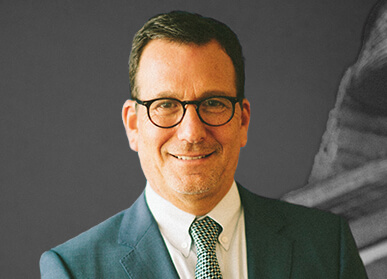
Roy Oppenheim

Social Networks and Foreclosures – Common Thread

Friday, July 24th, 2009

Do social networks and foreclosures have something in common?
Yes!  They are both contagious…

One of the most fascinating things about a financial crisis – if it lasts long enough – is that while you’re living through it you actually start to see research from various institutions concerning why the crisis has occurred and how to respond to it.  In our current state of mass foreclosure, the University of Chicago Booth School of Business and the Kellogg School of Management at Northwestern University have drafted a paper that addresses the root cause of the foreclosure crisis.

Up until now, both the Bush and Obama Administrations have been focusing on using government funding to support mortgage modifications, thinking that by reducing the monthly cash flow obligations of particular families or investors that the level of defaults will, in fact, decrease.

While fundamentally the government may not be completely wrong about how to resolve the crisis, one area that they clearly are not addressing is the fact that as much as 26 percent of all mortgage defaults are not based on an individual’s inability to pay, but rather is based on an individual’s decision not to pay their mortgage because the value of the property has decreased substantially. In the University of Chicago and Northwestern study, these decisions are called “strategic defaults.”

Particularly, they are finding that strategic defaults start to increase substantially when the value of the house or property decreases in excess of 50 percent of the value of the mortgage.

The researchers, according to Zillow.com, have determined that approximately 22 percent of all households have negative equity in their homes while in some areas such as Las Vegas and California, the amount of negative equity exceeds 50 percent.

The researchers further claim that current government policy was based primarily on research done during the 19901991 recession whereby it was determined that in Massachusetts only 6.4 percent of the population with mortgages chose to walk away from their houses when their home equity was negative.

Thus, the current researchers have had to distinguish what is different about this recession and this foreclosure crisis with that of the early 1990s in Massachusetts.

Clearly, one of the distinctions that exists is that in Massachusetts the prices from peak to trough did not fall in excess of 20 percent while in many areas in the United States the amount of equity that has been lost from the peak of the market well exceeds 20 percent.

Most importantly and also most alarming, is that the researchers were able to definitively conclude that once foreclosures start in a particular neighborhood or zip code, strategic defaults rise substantially and the moral misgivings associated with walking away start to erode.

In other words, if you know people who are in foreclosure, you may be more likely to decide to also go into foreclosure.  That reminds me of a recent study that determined that those individuals who have friends that are happy, or friends of friends that are happy, are more likely also to be happy.

Ironically, we are now finding that the rules of social networks apply both to good and bad situations… but that misery does indeed enjoy company, at least when it comes to the general population and how foreclosure is perceived by individuals within a particular community.

Most importantly, however, are the implications associated with idea of foreclosure and the contagion of foreclosure if the government does not figure out a way to create a public policy that will stabilize the housing stock.  It appears that merely throwing money into the mortgage modification process will not be enough. Rather, the government will need to create true incentives to allow first-time home buyers to jump into the market, as well as, to encourage investors and hedge funds to pick up the excess housing stock, thereby re-stabilizing housing pricing and ensuring that pricing does not continue to erode.

Clearly this study indicates that if we are able to reverse the continued decline of housing prices or at least prevent their continued erosion, then the foreclosure crisis would be able to resolve itself in an orderly fashion.  However, on the flip side, if prices continue to erode it is only logical and rational that individuals will continue to walk away from their properties and make strategic decisions that it is just not worth continuing to throw good money after bad. This is particularly true when your friends and relatives are throwing in the towel.

For more information on this topic, view Roy Oppenheim’s social networks and foreclosures video.

From the Trenches.

Oppenheim Law Participates in Real Estate Q/A Tonight on CBS 4

Monday, July 20th, 2009

Do you have questions about the Florida real estate market?

Are you wondering if now is the time to buy real estate or if renting is the way to go? Looking for information on the first time homebuyer credit?

Have questions? Get answers.

Roy Oppenheim and Geoff Sherman, real estate attorneys at Oppenheim Law will be live at CBS 4 tonight answering all things real estate. Call 305-597-4404 for free real estate tips from 5:00 to 6:30 PM EDT.

Roy Oppenheim, also owner of Weston Title and Escrow, the oldest title company in Weston, brings his insight on the right time to buy Florida real estate. With tips from the best of both worlds, real estate law and real estate closing services, Oppenheim will be answering questions about: the current FL real estate market, President Obama’s first time home buyers tax credit, refinancing, investors, and bottom fishers.

For more information visit: http://cbs4.com/ and tune into CBS 4 tonight at 5:00.

CBS News Hosts Roy Oppenheim as Foreclosure Defense Go-To

Friday, July 17th, 2009

Monday, July 13th, Roy Oppenheim was backstage at CBS4 News in Miami answering live questions about the foreclosure process and explaining tips necessary to save a home from foreclosure. In addition to Roy, there were four other Dade bar members available at the CBS4 phone bank to answer foreclosure questions.

Check out the video from the phone bank of Money Mondays’ host Al Sunshine interviewing Roy Oppenheim. The video depicts behind-the-scenes insight to what CBS4 put together for South Florida viewers.

During the foreclosure phone bank, which ran from 5:00 to 6:30 PM, over 400 homeowners called or emailed their questions to the team of attorneys and all received instant foreclosure defense advice and suggestions on each individual’s foreclosure situation.

“It was such a pleasure honor working with Al Sunshine, a one man institution in South Florida who always stands up for the “little guy,” said Roy Oppenheim. “I get such personal satisfaction from trying to help folks who can use my expertise. In fact I look forward to working with CBS4 Neighbors on a regular basis.”

For more information about Roy Oppenheim and how he can help save your home from foreclosure visit: www.oppenheimlaw.com.

Foreclosure Questions? Ask Live! Tonight on CBS 4

Monday, July 13th, 2009

Join Roy Oppenheim among other Dade County foreclosure attorneys tonight for the chance to be heard and get tips on how to save your home from foreclosure. Al Sunshine from CBS 4 has picked today’s ‘Money Monday’ topic to focus on foreclosure, and what to do to defend your home.

From 5:00 to 6:30 PM Roy Oppenheim will be answering phones and blogging away with information on what to do during foreclosure. The phones will be live for an hour and a half of call time for anyone to ask their question about foreclosure.

Call in to (305) 597-4404 and have your questions answered. Visit www.cbs4.com for more information.

White House is Prodding Mortgage Servicers to Modify More Loans

Monday, July 13th, 2009

It looks like mortgage servicers are going to woodshed for deliberately not modifying mortgages and allowing foreclosures to sore! its about time!  Here is the letter that Treasury Secretary Timothy Geithner and Housing and Urban Development Secretary Shaun Donovan sent to 25 mortgage-servicing firms last week:

“We are writing to you as a participant in the Administration’s Making Home Affordable (MHA) program. As you are aware, the Home Affordable Modification Program (HAMP) under MHA is designed to help responsible but at-risk homeowners modify their mortgages in order to lower their monthly payments to sustainable levels and avoid foreclosure. This program is a critical part of our collective effort to stabilize the housing market and promote economic recovery.

Since we published our detailed guidance, we have started to see a significant ramp-up in the number of trial modification offers and trial modifications underway. However, much more progress is needed. There appears to be substantial variation among servicers in performance and borrower experience, as well as inconsistent results in converting trial modification offers into actual trial modifications. We believe there is a general need for servicers to devote substantially more resources to this program for it to fully succeed and achieve the objectives we all share.

In order to assess our progress under the program and improve the speed of implementation, we request that you designate a senior liaison, with whom you have regular contact and who is authorized to make decisions on behalf of you as CEO, to work directly with us on all aspects of MHA. We will invite this person to meet with senior Treasury and HUD officials on July 28 to discuss full implementation of the program. To prepare for that meeting, we ask that your liaison send us a letter by July 23, detailing specific steps that your organization will take towards effective implementation and compliance. Similarly, we invite you or your liaison to provide suggestions on ways that we can improve program design.

In conjunction with this meeting, we plan to take three important steps to improve the program’s performance. First, we will begin publicly reporting results under the program. By August 4, we will begin issuing monthly reports with servicer-specific performance measures, including the number of trial modification offers each servicer has extended to eligible borrowers, the number of trial plans that are underway; the number of final modifications, and eventually, the long term success of those modifications. The purpose of these reports is to provide a transparent and public accounting of individual servicer performance as well as overall program performance. We will discuss with you the content of these reports at the July 28 meeting.

Second, we will work with servicers such as you to set more exacting operational metrics to measure the performance of the program, such as average borrower wait time for inbound

borrower inquiries, the completeness and accuracy of information provided applicants, document handling, and response time for completed applications.

Third, in order to minimize the likelihood that borrower applications are overlooked or that applicants are inadvertently denied a modification, Treasury has also asked Freddie Mac, in its role as compliance agent, to develop a “second look” process pursuant to which Freddie Mac will audit a sample of MHA modification applications that have been declined. Freddie Mac will coordinate with servicers such as you to address specific cases that arise and to address general operational weaknesses where errors prove more systematic.

We are asking that all servicers expand servicing capacity and improve the execution quality of loan modifications in order to help the sizable number of homeowners at risk of foreclosure and eligible for the program. This will require adding more staff than previously planned, expanding call centers beyond their current size, providing an escalation path for borrowers dissatisfied with the service they have received, bolstering training of representatives, developing extra on-line tools, and sending additional mailings to borrowers who may be eligible for the program.

We are confident that together we can improve the speed and efficacy of the MHA program in a manner that is consistent with your aims as a leading financial institution.

Our shared goal must be to make the program as successful as possible in keeping Americans in their homes and providing stability to the housing market. With your continued help, we believe that we can achieve this goal.

Sincerely,

Timothy F. Geithner Shaun Donovan”

http://www.washingtonpost.com/wp-dyn/content/article/2009/07/09/AR2009070902928.html

Free Webinar: Defending Your Home in Today’s Economy

Wednesday, July 8th, 2009

Life is tough as a homeowner in today’s economy. It may feel like your world is upside down, everyone is against you and nobody is there to listen, advise or protect. We understand, and you’re not alone. More than 321,000 households received a foreclosure filing last month.

Financial problems are personal, which is why Roy Oppenheim has designed a way to offer foreclosure solutions in a private webinar from the convenience of your home or office.

Ask Questions. Get Answers. Register Today for Foreclosure Defense 101.

What: Foreclosure Defense Webinar

When: July 9, 2009, 6:00 to 7:00 PM

Why: Learn the options available to defend foreclosure

Register: http://bit.ly/15xZoa

Tomorrow’s webinar will teach homeowners facing foreclosure the options they have to save their home and explain the strategies Oppenheim Law utilizes in it’s foreclosure defense.

Other topics covered in tomorrow’s workshop include:

  • Refinancing during foreclosure and the increased odds through mediation
  • Short Sales
  • Increasing home values in South Florida
  • New Florida foreclosure defense bar and what it means for Florida foreclosure
  • Florida Foreclosure attorneys working together on plan appeals
  • Law enforcement workers in foreclosure, public policy implications, and what this means for all of us
  • Homeowner Associations and their decision to foreclose their liens on the Banks

Today is the last day to register. Reserve your seat today: http://bit.ly/15xZoa