Finally!!!It’s a word that is being bantered about the hallways of Oppenheim Law all too often these days, and thanks to the Fed’s recent comments on the foreclosure crisis, it’s been thrown around at rapid-fire pace these last few days.
Through a 26-page white paper which highlighted the “extraordinary problems plaguing the housing market”, officials at the Federal Reserve have told policymakers on several congressional banking committees that the government must step up and take a more active role in fixing the mess that they themselves have helped create.
Up until now the Fed has kept their fingers out of the housing market, but even they now realize the far-reaching impact the foreclosure crisis is having on the overall economic climate. In the white paper they offer up several suggestions, such as reducing the barriers to converting foreclosed homes into rental properties, and loosening the grip on lending standards in order to help the market recover.
The Fed now wants harsher action from Congress on America’s top lenders, and Governor Sarah Bloom Raskin even told a conference at the Association of American Law Schools that the Fed “must impose penalties for deficiencies that resulted in unsafe and unsound practices.”
It must be time to check our subscriber list to the South Florida Law Blog, because it sure looks like our friends at the Fed are on it!
We’ve suggested for a while now that turning foreclosed homes into rental properties is an obvious and logical step. For years banks have collected homes like animals in Noah’s Ark, and now it’s time to put this inventory to good use. 60 Minutes showed us what happened when these homes go empty, so why not put good people in these homes! The government may not like the idea of becoming a landlord, but really isn’t it better than the alternative!! This mass inventory of foreclosed homes can be an asset for our government if more of them are rented out, instead of being a detriment. (more…)
Banks will need to clean up their circus “act” in 2012 when it comes to Florida foreclosure cases thanks to a series of stinging decisions handed down by the 4th District Court of Appeals that could be the gift that keeps on giving for Florida homeowners.
The court finally realized the banks must have the proper authority before they proceed in the foreclosure process. For years I have been saying the banks have systematically been cutting corners in the foreclosure defense process by not having the requisite power to bring their cases.
In this most recent case, Robert McLean vs. JPMorgan Chase, Chase, which was seeking to foreclosure on McLean’s Broward County home, claimed the note from the borrower was “lost, stolen or destroyed.” I call shenanigans on that claim. The truth is banks were in such a rush to move forward that they just never bothered to check their own paperwork.
McLean sought to squash the foreclosure because he said that Chaseultimately could not prove they were the owner of the note. In fact the assignment of mortgage, which is a document which indicates that a mortgage has been transferred from the original lender, which Chase produced to the court was signed three days AFTER the first foreclosure complaint was filed by the bank.
The 4th DCA, in our eyes, had no choice but to reverse a lower court’s decision and side with the homeowner. As the saying goes, possession is nine tenths of the law, and in this case, Chase was left holding an empty bag. The court noted that if there was “substantial doubt about the note” that the bank should dismiss and refile the case, and it was clear from Chase’s lack of concrete proof that they had no legal standing in this case.
As 2011 got underway we were presented with a fascinating yet disturbing report by the Florida Association of Court Clerks called “Unfair, Deceptive and Unconscionable Acts in Foreclosure Cases”. It brought these horrible practices into the harsh light of day.
“What we got from this is the state has had the opportunity to see where the laws have been broken,’ Palm Beach County Clerk and Comptroller Sharon Bock said at the time, “and frankly, it is in large part thanks to the work of the defense attorneys.
We cited April Charney from the Jacksonville Area Legal Aid and Peter Ticktin and many others wonderful attorneys who have taken bank officers’ depositions, challenged judges rulings and fought the good fight for the Florida homeowner.
Somewhere along the line, the overly ambitious bankers on Wall Street had the “great idea” of slicing and dicing the interest of the Promissory Note and literally severing it from your Mortgage. Why? Convenience,expediency, and, arguably, greed. And much like Humpty Dumpty after his great fall, the banks couldn’t bring the mortgages and their corresponding Notes all back together again. The banks were accused of fraud and perjury trying to do just that.
If Americans are right, 2012 will finally be the magic year for the housing market. Over 2,000 adults were polled by Trulia and RealtyTrac , and the majority, 22 percent, said most Americans think the housing market will fully recover in the new year. A mere 10 percent thought a recovery would happen this year, while nearly a quarter of those surveyed predicted a bumpy road until 2015 and beyond. (more…)
Some of Oppenheim Law’s most popular videos and blog posts this year were on the topic of deficiency judgements. Understanding deficiencies and the Florida rules which pertain to them are key to avoid getting a deficiency judgment.
The unpaid mortgage debt associated with a residence is a deficiency. A bank can foreclose and force a judicial sale of a home if the mortgage borrower fails to pay the associated mortgage debt. The deficiency is the difference between the proceeds from the sale and the remaining mortgage loan balance. A deficiency can also result from a short sale, which is an alternative to foreclosure.
The rules pertaining to deficiencies differ from state to state. In Florida, if the bank is successful in obtaining a deficiency judgment, it will be recorded in the public records and collectable for up to twenty years. To avoid the possibility of getting a deficiency judgment, before deciding to walk away from your home, hiring a good foreclosure defense attorney is necessary.
At first glance, it looked like Floridaforeclosurevictims were finally getting the help they need from the feds. Reading the fine print it looks like if we had to describe this in one tweet word: #fail. (more…)
Just as Oppenheim anticipated, this year we’ve seen how big this foreclosure mess really is. There were numerous investigations, and a self-imposed moratorium on foreclosures during parts of 2011, resulting in a massive backlog of cases.
It was ludicrous, as Bank of America officials first said, that they would only need 60 days to review their inventory of files.
“It took them virtually a year to figure out that they were doing were just not kosher and had to stop,” Oppenheim explained.
There were several huge financial settlements offered to the banks over their illegitimate foreclosure practices, but the majority just did not stick. Judges told them the settlements were unacceptable and did not go far enough. With various attorneys general and the IRS among the agencies getting involved, these cases are nowhere close to settled.
“The banks literally got their hand not just caught in the cookie jar, but the lid was slammed on it, and everyone got to see the hand just hanging there,” said Oppenheim.
2011 is leaving us with a still unstable market, so people are looking for tangible investments, Oppenheim continued, and with the dollar still weak, Florida real estate is not a bad deal. When you add the fact that there is an excess of distressed properties, prices are not expected to rise anytime soon. he said.
Now every year there is an X-Factor, and this year it was Occupy Wall Street. It was a movement no one really saw coming, and despite some right-wingers attempts to limit Occupy as a fringe movement, Oppenheim said, there is no question the message of Occupy has resonated with middle America. (more…)
The world is upside down again: Banks are walking away while homeowners are staying to fight for their neighborhoods.
That’s what the team at Oppenheim Law realized after watching 60 Minutes’ latest piece on the foreclosure crisis. This time Scott Pelley focused on a neighborhood in Cleveland where officials has resorted to tearing down what were once perfectly good homes.
Why? Because the banks that control the homes have been acting as terrible irresponsible neighbors. The end result is too many neighborhoods are littered with abandoned properties, many of which have been stripped to the bone by thieves. As many as 25 percent of these homes are now empty, according to Pelley. These neighborhoods, of which there are far too many, have fallen into a state of disrepair, where a total tear-down is the only option.
You don’t have to be underwater to get splashed
Probably the most disturbing revelation to come out of the 60 Minutes story was the foreclosure crisis has impacted all homeowners, regardless of whether they are in danger of losing their homes or not. In fact their homes didn’t even need to be underwater to feel the pinch of the housing mess.
With countless homes now empty and transformed into eyesores, those who remain are seeing their property values sink faster than the Titanic. People are left with homes that are virtually worthless and unsellable, so even if they wanted to buy a home somewhere else, it’s unlikely they could. (more…)
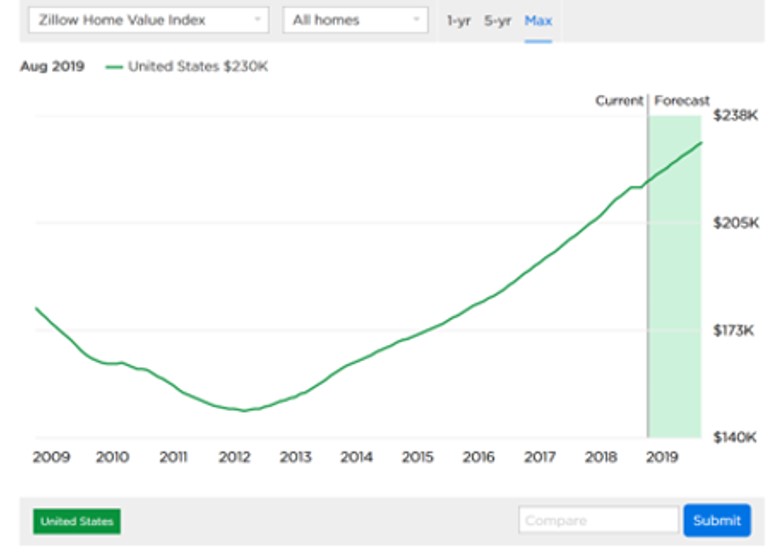
The inventory of unsold homes has declined sharply from one year ago in many markets including Florida. While Oppenheim Law agrees price declines and low mortgage rates have pushed affordability to its best level in the past decade, the prospect of falling prices, more Florida foreclosures, and economic uncertainty continue to hold back the demand of leery wanna-be homeowners.
What makes this a Florida real estate buyer’s market?
Home values have declined
Apartment renting is expected to escalate in price
Mortgage rates are at the lowest in six months, hovering at 4 percent
Inventory in markets such as Miami are down by almost half compared to last year
What makes this a questionable buyer’s market for Florida real estate?
Mortgage rates are expected to stay low, so there is no sense of urgency to buy now according to analysts
The potential supply of homes is much bigger because banks have yet to process hundreds of thousands of potential foreclosures.
The question of buying versus renting is not a black and white decision, even for the Florida sunshine state where there is evidence of progress and hope. If you are considering buying a home, Weston Title & Escrow can guide you through the process.