Oppenheim Law hosted its largest Free Florida Foreclosure Defense Workshop Wednesday night as the real estate market and foreclosure defense landscape evolves.
Almost half of South Florida homeowners are facing negative equity in their homes, and more than 400,000 Florida foreclosure cases are expected by the end of 2010, according to real estate attorney Roy Oppenheim.
More than 40 South Florida homeowners turned out to hear the latest legal techniques and strategies Oppenheim Law is using to defend foreclosures, execute short sales, prevent deficiency judgments and keep people in their homes.
We’ve put together a summary of the main points from March’s Workshop, and look forward to seeing you at the next free event on April 1st at 6 p.m.
Social stigma is so yesterday. The fact that so many people are being affected by this real estate crisis completely erased the social stigma associated with foreclosure.
Banks are overwhelmed. The depth and breadth of this crisis makes it difficult for banks to successfully foreclose homeowners who are represented by counsel.
Do what’s right for you and get help. If it no longer makes economic sense to continue paying your mortgage, your best option is to speak to a qualified attorney.
Don’t leave. Whatever you chose to do, stay in your home as long as possible.
Banks warming up. Short sales are emerging as one of the best options for homeowners facing foreclosure, and believe it or not, banks are beginning to favor them as well. Some short sales are being approved in less time than in the past. One need only be 30 days behind on your mortgage to begin the short sale process.
The bank is happy with instant cash gratification, while you avoid the hassle and stress of foreclosure proceedings.
Price is right. When executing a short sale, an experienced real estate agent must price your home correctly, and you must protect yourself from a costly deficiency judgment through legal representation.
Know the facts. Deficiency judgments can stay on your record for up to 20 years: Banks may garnish wages and even collect against heirs.
Oppenheim Law has negotiated reductions in deficiency judgments by as much as 80-85%.
It is important to remember that buying yourself time in this real estate market can prove to be incredibly valuable. The tide is beginning to turn as new laws are discussed and the economy makes gains.
Again, 97% of folks facing foreclosure are not represented by counsel. Those who are have a much better chance of avoiding a deficiency judgment and saving their home.
We look forward to hearing your comments on March’s workshop and hope to see you all on April 1 for our next event.
Short sales are emerging as a formative foreclosure defense strategy, according to Florida real estate attorney and legal blogger Roy Oppenheim.
Join Oppenheim Law at the next Free Legal Real Estate Workshop on Wednesday,March 3, as Oppenheim explains how short sales can prevent Florida deficiency judgments and provides insider tips for buying and selling Florida real estate in this turbulent market.
What: Short Sales, Deficiency Judgment + More: Free Legal Workshop
When: Wednesday, March 3, 2010 – 6:00 to 7:00 PM
Who: Homeowners facing foreclosure, real estate professionals, buyers and sellers
Where: 2500 Weston Road, Suite 404, Weston, FL 33331
Cost: Free with advanced registration
RSVP: To register email roy@oplaw.net or call 954.384.6114
For more information visit the Oppenheim Law News Room to access all of the event’s details. Please feel free to leave a comment if you have any questions or suggestions for the workshop.
Oppenheim Law looks forward to seeing you all on Wednesday, March 3rd.
Rock the vote! Voting is underway for The Sun-Sentinel’s Best of Blogs Awards and Oppenheim Law’s South Florida Law Blog received a nomination in the Business Blog Category.
The South Florida Law Blog is committed to bringing timely news and advice to our readers as we work together to survive this treacherous real estate market.
We appreciate your continued support, feedback and comments and look forward to bringing you the latest and greatest in Florida foreclosure defense and real estate trends.
Oppenheim Law has been arguing for creative and practical solutions that benefit banks and homeowners alike for more than two years. Finally, while curiously late into the game, CitiMortgage announces a trial deed-in-lieu mortgage program allowing homeowners to avoid the painful foreclosure process.
The deed-in-lieu program allows Florida homeowners facing foreclosure to remain in their homes for 6 months, in exchange for signing over their deeds to CitiMortgage at the end of the period.
Check out Roy Oppenheim’s opinion on the CitiMortgage announcement by reading the entire article in the Oppenheim Law News Room.
Great news for real estate investors and flippers who were once restricted with the 90 day FHA anti-flipping regulations. Due to the increase in the volume of foreclosures over the past two years, the Department of Housing and Urban Development recently announced that they are waiving the 90 day flipping regulations in 24 CFR §203.37a(b)(2) in order to permit potential buyers greater opportunities to purchase homes and obtain FHA financing. The waiver became effective on February 1, 2010 and will expire on January 31, 2011. This regulation previously restricted the eligibility for end-buyers to obtain mortgages insured by FHA when these properties are re-sold within 90 days following the original acquisition of the property by the seller. This waiver is limited to re-sales that are sold at an arms-length transaction.
There are two caveats to this waiver that you must be aware of. The first caveat is that the waiver is limited to forward mortgages, so it does not apply to Home Equity Conversion Mortgages. The second caveat is when the sales price of the property is 20% or more over and above the seller’s acquisition costs, the waiver will only apply if the new buyer’s lender:
(1) Justifies the increase in value by retaining in the loan file supporting documents and/or a second appraisal verifying that the seller has completed sufficient legitimate renovations, repair and rehabilitation work on the subject property to substantiate the increase, or the appraiser provides appropriate explanation of the increase in property value since the prior transfer of title; AND
(2) Orders a property inspection and provides the inspection report to the purchaser before closing.
A. The lender may charge the borrowers for this inspectio
B. The inspector:
Does not have to be an FHA-approved or a 203(k) consultant
Must have no interest in the property or relationship with the seller
Must not receive compensation from any other party other than the lender
May not compensate anyone for the referral of the inspection
May not receive any compensation for referring or recommending contractors to perform any repairs recommended by the inspection.
C. At a minimum the inspection must include:
The property structure, including the foundation, floor, ceiling, walls and roof;
The exterior, including siding, doors, windows , appurtenant structures such as decks and balconies, walkways and driveways;
The roofing, plumbing, electrical, heating and air conditioning systems;
All interior; and
All insulation and ventilation systems
So to all of you real estate investors… go ahead and buy these lemons and make a profit by selling lemonade.
Oppenheim Law marked its 16th Monthly legal real estate workshop last Thursday and thanks to you – our readers – who attended or brought a friend, we continue to evaluate the real estate market.
For those not able to make the event, I have two pieces of good news for you:
Oppenheim Law is already preparing for our next free real estate workshop scheduled on Wednesday, March 3.
We have a recap of the workshop’s timely highlights
The most important message: things are changing.
Florida Foreclosure Defense is constantly evolving and Oppenheim Law is finding new ways to defend foreclosures every day.
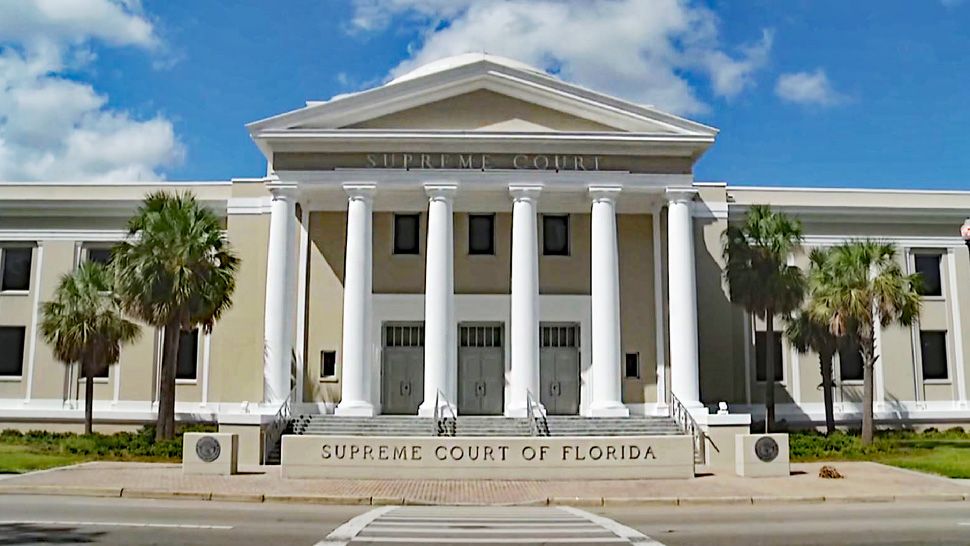
The FL Supreme Court’s ruling requiring mandatory mediation between homeowners and banks already started in Palm Beach and Miami-Dade Counties.
70% of foreclosure cases that go to mediation are settled.
Walking away from an underwater mortgage is no longer a moral decision. The banks were allowed to walk away from their monumental debt and write it off as a “business decision.” Why can’t homeowners do the same?
The crisis in Haiti will likely have an influence on the South Florida real estate landscape. Florida saw similar results after Hurricane Andrew when folks were searching for new places to live. Black Swan events like these are important to consider and watch.
Oppenheim Law stresses the importance of helping homeowners avoid deficiency judgments at all costs. Ignoring the foreclosure notice or moving out is perhaps not the best possible decision you can make.
While 97% of folks facing foreclosure are not represented by counsel, those who are have a much better chance of avoiding a deficiency judgment and saving their home.
We look forward to hearing your comments on our last workshop and invite you to join us on WEDNESDAY, March 3 (A Wednesday for this next month only!)
In case you didn’t hear, the Obama administration announced changes for requirements of paperwork and documents regarding the Making Home Affordable on Thursday, hoping to improve the success rate and communication between homeowners and lenders.
While this bureaucratic decision may indeed help a few more modifications squeeze through the banks clenching hands, ultimately, the change that is needed for South Florida homeowners requires substantial principal reduction on underwater mortgages.
Oppenheim Law has been arguing for over a year that there are too many mortgages valued greater than the actual market worth in South Florida, and merely lowering interest rates and extending the life of loans will not do enough to solve the Florida foreclosure problem.
To read my thoughts on the latest Home Affordable Modification Program changes, check out the entire Miami Herald article, “Home-loan aid altered” in the Oppenheim Law News Room.
Real Estate Black Swan Arrives: Free Legal Foreclosure Workshop February 4
The attorneys at Oppenheim Law point to the crisis in Haiti as a “black swan event,” an occasion no one could have foreseen with drastic effects on the South Florida real estate landscape.
Join Oppenheim Law at the next free legal real estate workshop on February 4, as Roy Oppenheim explains how the tragedy in Haiti will affect South Florida foreclosure. The workshop will also provide insider tips for buying and selling Florida real estate in this turbulent market and explain how to avoid deficiency judgments at all costs through South Florida short sales and other Florida foreclosure defense strategies.
What: The Black Swan is Here: Free Real Estate Workshop
When: Thursday, February 4, 2010 – 6:00 to 7:00 PM
Who: Real estate professionals and homeowners facing foreclosure, buyers, and sellers
Where: 2500 Weston Road, Suite 404, Weston, FL 33331
Cost: Free with advanced registration
RSVP: To register email roy@oplaw.net or call 954.384.6114
For more information visit the Oppenheim Law News Room to access all of the event’s details. Please feel free to leave a comment if you have any questions or suggestions for the workshop.
Oppenheim Law looks forward to seeing you all on February 4th.
Haitian Crisis Will Likely Change Real Estate Market in South Florida
At my most recent seminar last week I discussed the possibility of a Black Swan event occurring that would literally change the complexion of the South Florida real estate market. A Black Swan event is something that just can’t be anticipated. At that moment I gave as an example the possibility of tens of thousands of folks from Venezuela fleeing to South Florida from Chavez’s new economic restrictions.
Now it is already anticipated that Haitian refugees will likely be arriving in South Florida over the next several months and likely years. They will need to be housed and be fully integrated into the community.
Further I had discussed that as a nation and as a community, we are blessed with a housing stock or what I call our “Ark”. That Ark of excess vacant housing can now be deployed with the assistance of FEMA and HUD and other governmental programs to help our struggling island neighbors.
Thus, once again not even the best economists could have anticipated the economic impact both good and bad that such an unthinkable crisis can have to a community. I do hope that with so many vacant homes and condos now in South Florida, and many still owned by the Banks, that we will be able to utilize this housing reserve.
Just as 2009 ended, the Florida Supreme Court announced a uniform procedure for all newly filed foreclosure cases for homestead properties. While the procedure is not yet fully in place, it should be shortly.
The Court acknowledged the system is not working. Foreclosure filings are expected to reach 456,000 cases in Florida by the end of 2010, a 50% increase from those in 2009. Thus, the Court felt compelled to do something.
My free foreclosure and real estate workshop on Thursday, January 7, at 6 p.m. is designed to review the “Year That Was” and preview the “Year That Will Be” based on the New Rules for 2010.
These new rules mean banks will be taken to task by the legal system. If conducted properly, a homeowner can demand proof of the Note and ownership of the loan prior to mediation. If the bank does not show up at the mediation or does not have a person with “true” authority to settle the case, the Court can issues sanctions against the bank and even hit the bank with attorney’s fees in some instances.
Until now approximately 75% of cases in mediation settled. That number should now shrink since the system will soon be overloaded with mediations. The real question is how to take control of this new strategic tool. Of course, one has to be mindful of the old saying, “Be careful what you ask for.” That will certainly be the situation here.
You need to know your objective and have a plan or strategy. Is your desire to walk away without the bank coming after you, or is it to stay and renegotiate the loan to its new underwater value? Or is it to rent the house and just be able to stay?
Lots of creative options will arise that are good for the homeowner and even the bank. The key is knowing what is best for you and using this new opportunity as a way to fashion your own bailout.
I hope to see you all Thursday night, January 7th, at our free Florida foreclosure defense and real estate workshop as Oppenheim Law helps you achieve a New Bailout in the New Year. Again, I wish you all the best in 2010!